How this started, why it matters to us, and why we can't imagine stopping.
The moment it clicked
The summer between freshman and sophomore year, I was handed a reading assignment I wanted nothing to do with. The book was thick—Dean Koontz's Watchers—and I put it off as long as I could. One month before the semester, I finally cracked it open.
Slowly, without meaning to, I started seeing everything. The dog. The creature. The way they circled each other. The suspense built until the pages turned themselves, and when the last one was done I sat there understanding, for the first time, why people enjoy reading. Not because someone told me to—because the story pulled me in and wouldn't let go.
I spent the next ten years chasing that feeling. Reading became something I did for information, not for experience—and the difference was night and day. I could recall what I read, but only when I was looking forward to it, not fighting through it.
Twenty years later, I opened the Bible with a different intention. Not to get through it—to experienceit, to see it for all the value it provides. And somewhere in that effort, God gave me the vision for what you're looking at now. This is not just an idea I chased after. It's an inspiration from God—an accumulation of time in the truth, a thank-you, and a timeline.
Where it started
I wasn't alone. If you've ever opened the Bible with real intention—really meant to read it, not only to search for one verse—you probably know the feeling. The type is small. The names stack up. You read a beautiful chapter, life gets loud, and when you come back you can't quite remember where the story left off. It isn't a failure of character; it's the weight of an ancient library pressed into a single binding.
We grew up around people who loved Scripture and still admitted, quietly, that they'd never walked the whole arc in order. Some had tried dozens of reading plans. Some knew individual books well but couldn't place one prophet relative to another. The hunger was there. The through-line was the missing piece.
The idea
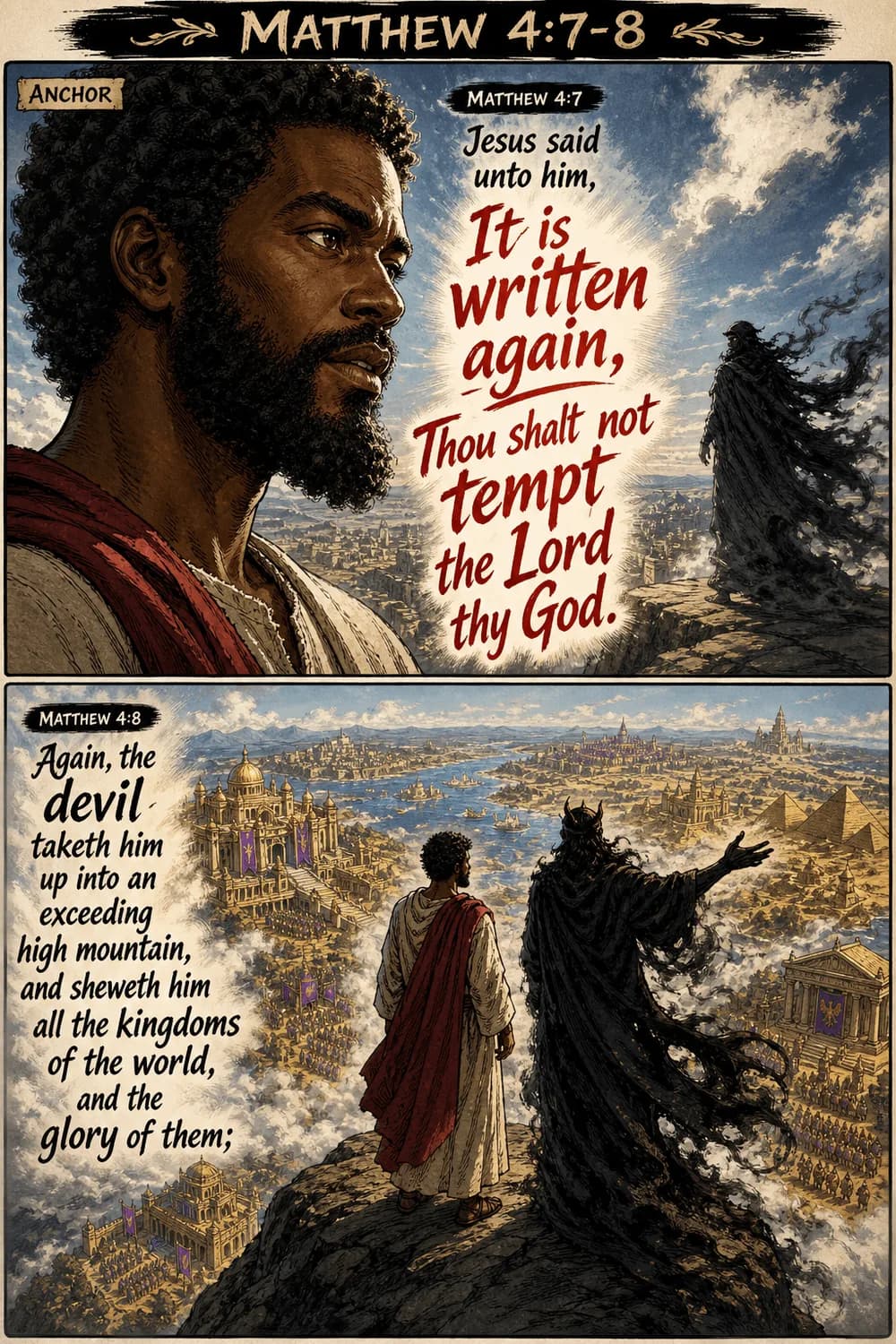
Comics and film taught us something obvious in hindsight: when images carry sequence, your brain keeps track. You remember a face. You notice when the same road appears again. You feel time passing because the light in the panels changes. We wondered what would happen if Scripture—not a summary of Scripture, not a side-by-side paraphrase, but the actual narrative order of revelation—rode on that same rail.
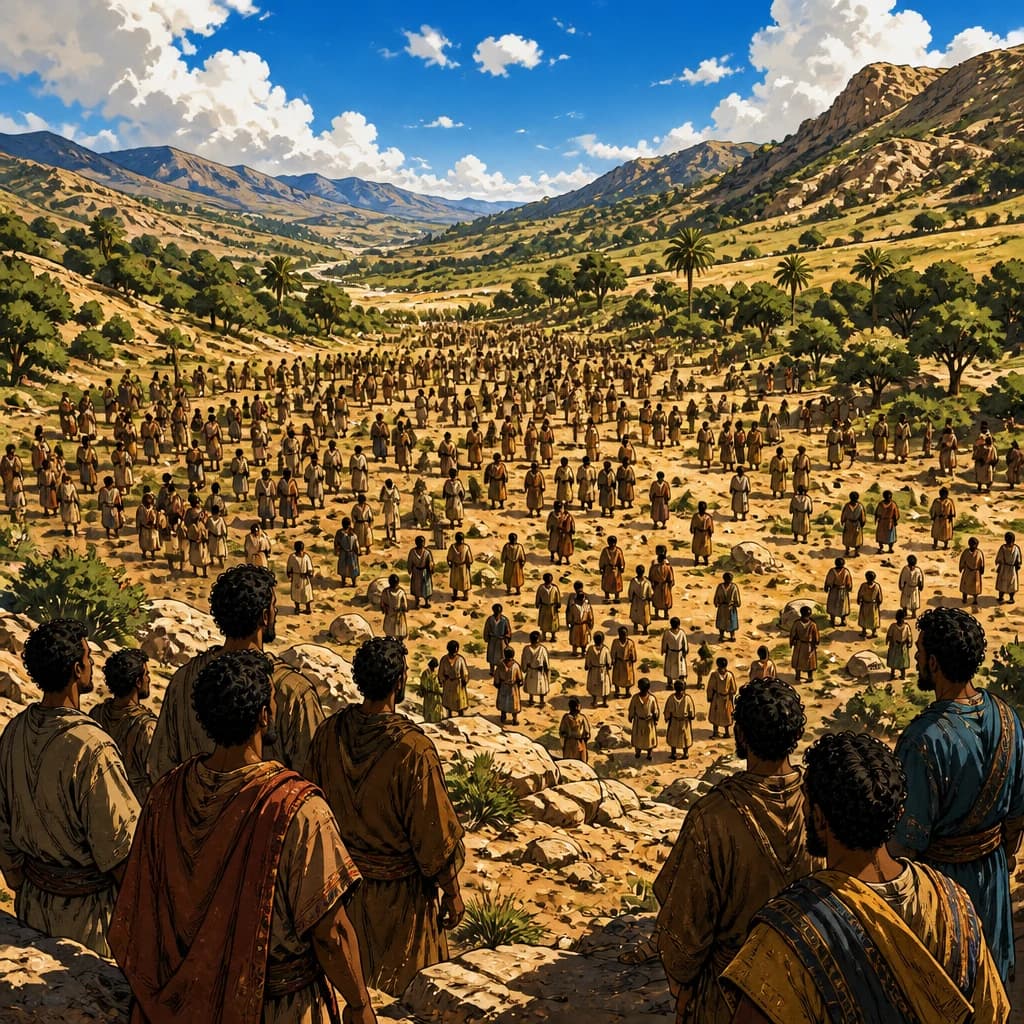
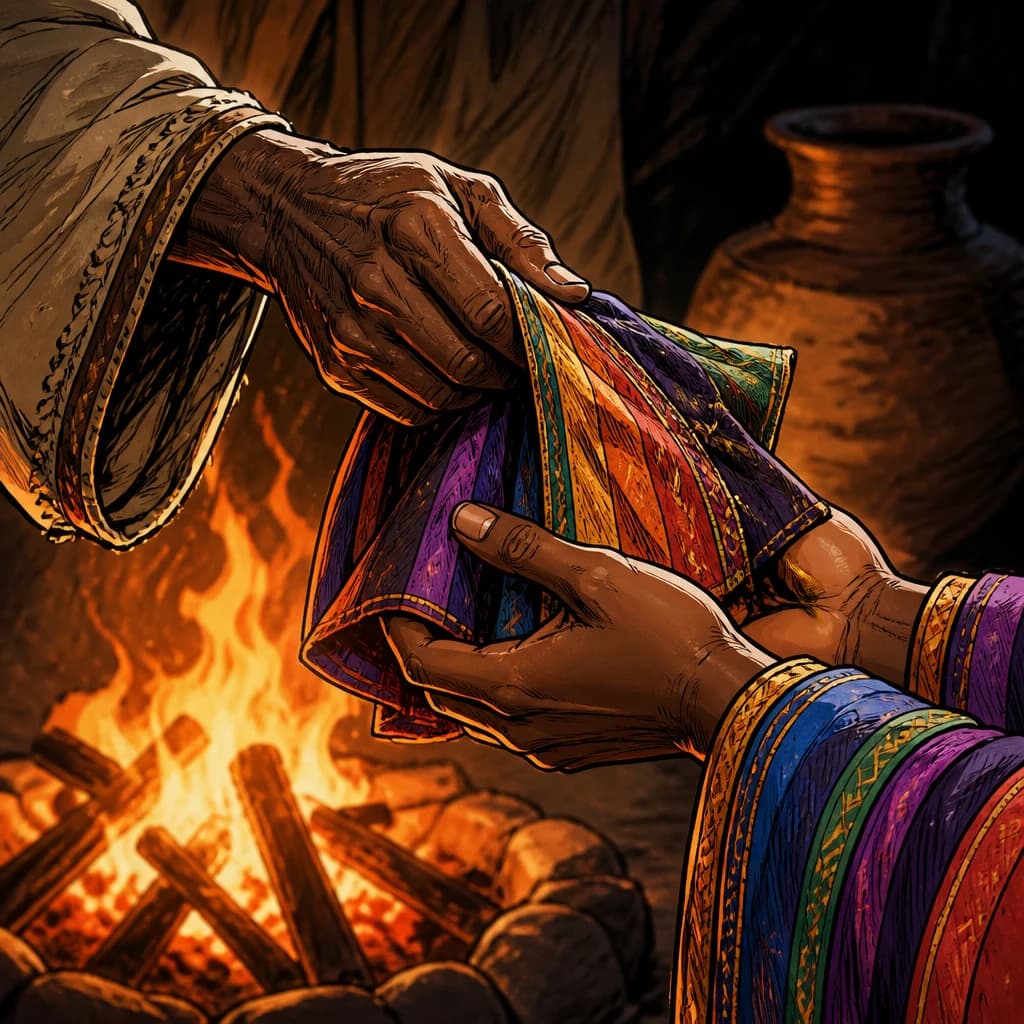
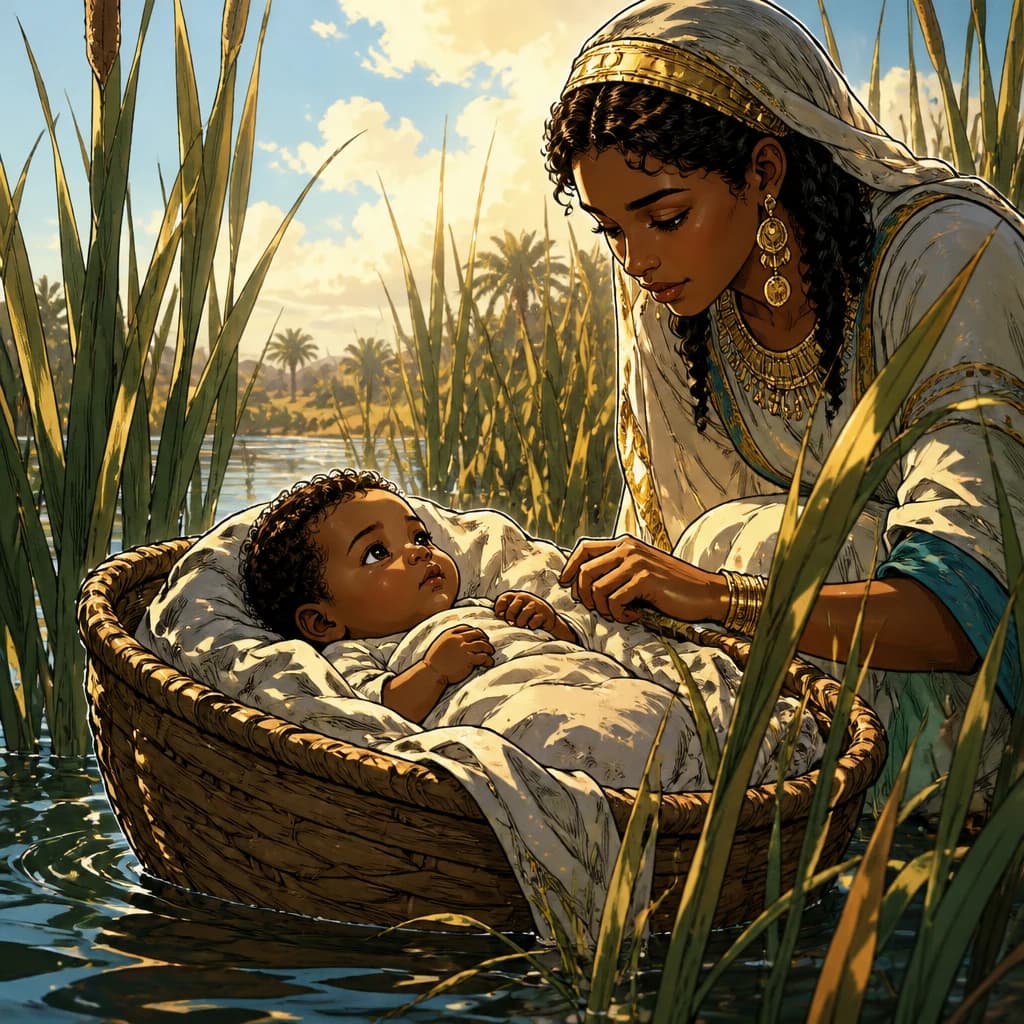
One unfolding story—panel by panel—in traditional ink wash. No skipping centuries unless you want to.
Ink wash felt right for the same reason it has lasted centuries: it can be gentle and epic at once. It doesn't shout. It invites you to stay. And it leaves room for the text itself—quoted on the page, honored in the layout—to remain the authority, with the art as servant, not replacement.
Why order
So much of the Bible is reunion: someone you met early walks on stage again; a place named in one book echoes in another. When you read out of order—or only in fragments—that music is easy to miss. Visual Bible Timeline is stubborn about historical sequence because we want you to recognize Abraham when he reappears in a later chapter, and to feel the geography when the story doubles back. The sequence lives in the art the same way it lives in the text.
Who we are
We are a small team of artists, builders, and readers who decided this was worth years of our lives. A single panel takes 3–5 hours. A full book takes weeks. We argue over costume research, panel rhythm, and whether a spread should breathe or push. We lose sleep over legibility and licensing and how to protect the work subscribers pay for, because the art is the product, and treating it lightly would betray the whole point.
Whatever good comes from these pages belongs to God. We're grateful to be the hands. That line isn't humility for show; it's the only honest way we know to talk about a project this big with a team this small.
Meet the team
We're a small studio split between the brush and the keyboard—panel pacing, historical detail, and the reader you actually use every week. We're adding named bios and portraits here as we're ready to introduce ourselves publicly; until then, the work on the page is the introduction.
Ink wash, composition, and research—costume, landscape, and the emotional beat of each chapter so the sequence still feels like one story when you come back after a busy week.
The reader, accounts, saved progress, subscriptions, and the release rhythm that keeps new chapters landing without breaking trust with people who pay for the serial.
Social channels are coming soon—process clips, new panels, and behind-the-scenes updates.
The horizon
Today, VBT is a reader: chapters of ink-wash panels you move through in order, with accounts, progress, and a shipping rhythm that funds the next book. That alone is already the work of a lifetime. But we are not confused about the longer picture. A visual Bible, in our vocabulary, eventually includes the world outside the frame—artifacts, manuscripts, maps, and carefully cited scholarship that help honest readers see why the text sits where it does in history. None of that replaces faith. It grounds curiosity.
We will add those layers as fast as quality allows—and not a moment faster. The work has to earn the trust people place in it.
If this is you
If you have ever wished Scripture felt less fragmented—if you want your kids, your small group, or your future self to have a single visual path through the narrative—we built this for you. If you are skeptical, we welcome that too: watch the free samples, read the FAQ, and decide on the evidence. Either way—you're a Sojourner.
“I would read the Bible but never like this. I'm usually behind on my studies, but with VBT I've read more chapters than I usually would without it. And the graphics are so captivating, I could just stay watching that alone.”
— Taharah